
AEO vs GEO vs SEO: What Actually Changes?
A practical guide for businesses comparing SEO, AEO, and GEO, including what changes in content, technical setup, authority, measurement, tools, and AI search visibility.
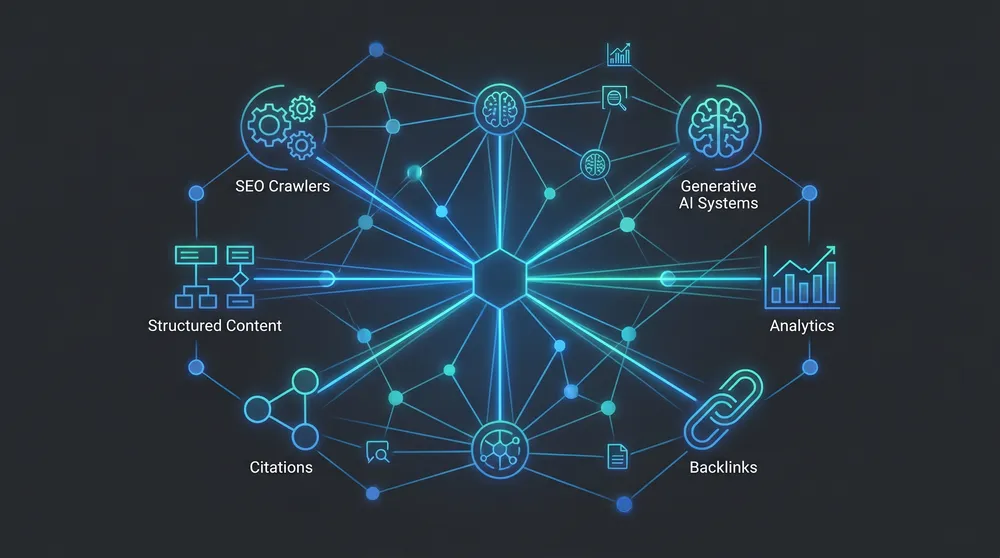
AEO, GEO, and SEO sound like three competing strategies, but they are better understood as layers. SEO helps pages get crawled, indexed, ranked, and clicked. AEO helps content answer questions clearly enough to be used in answer-style search results. GEO helps a brand, page, product, or expert become visible inside generative AI responses that summarise multiple sources.
The biggest mistake is treating GEO as a replacement for SEO. Google's guidance for AI features says there are no special AI-only requirements beyond the normal Search essentials: make content crawlable, indexable, snippet-eligible, helpful, visible as text, internally discoverable, and supported by accurate structured data where relevant.
What changes is the job of the page. A traditional SEO page tries to rank for a query and win a click. An AEO page tries to deliver a direct, trustworthy answer. A GEO-ready page also has to be quotable, entity-rich, well-corroborated, and useful as a source when an AI system builds a response from several documents.
The Three Layers
The terms overlap, but each one puts pressure on a different part of your search strategy.
SEO
Search Engine Optimization improves crawlability, indexability, relevance, authority, rankings, snippets, clicks, and conversions from traditional search results.
AEO
Answer Engine Optimization structures content so it can answer specific questions clearly in featured snippets, voice-style answers, FAQs, zero-click results, and AI-assisted search.
GEO
Generative Engine Optimization improves the chance that AI systems mention, summarise, recommend, or cite your brand, page, product, expert, or evidence in generated answers.
What Stays
Technical SEO, helpful content, internal links, authority, page experience, structured data, and business relevance still matter.
What Changes
Prompts are broader than keywords, answers are synthesised from multiple sources, and measurement expands from rankings and clicks to citations, mentions, and share of voice.
What Matters Most
Useful content with clear entities, original proof, direct answers, reputable mentions, and crawlable pages has the best chance across all three layers.
Options and Cost Snapshot
Pricing checked on 11 May 2026. US-dollar prices are converted to AUD using the requested planning rate of 1.7x. Treat prices as planning estimates because vendors can change plans, limits, currencies, taxes, and packaging.
| Option | Cost snapshot | Best for | What it helps with | Limitations |
|---|---|---|---|---|
| SEO foundation using free tools | Free, plus internal or agency time. | Every business. | Use Google Search Console, Bing Webmaster Tools, analytics, sitemap checks, crawl access checks, page quality review, internal links, and basic structured data validation. | Free tools show what is happening, but they do not prioritise every content, authority, or AI visibility opportunity for you. |
| Manual AEO refresh workflow | AUD 0 in software cost, plus editorial and SEO time. | Small and medium businesses with existing service pages and blog posts. | Add direct answers, definitions, comparison tables, FAQs, concise summaries, examples, and internal links to make pages more answer-ready. | Hard to scale without a content inventory, quality scoring, and regular measurement. |
| Manual GEO visibility review | AUD 0 in software cost, plus research time. | Businesses testing whether they appear in ChatGPT, Perplexity, Copilot, Gemini, and Google AI features for important questions. | Run controlled prompt checks, record mentions, cited domains, cited URLs, competitor presence, missing sources, and answer gaps. | Manual AI checks vary by location, account, date, model, prompt wording, and personalization. They are useful directionally, not as perfect analytics. |
| Semrush AI Visibility Toolkit | USD 99/month, about AUD 168.30/month. Semrush states there is no free trial for the toolkit, and extra domains, users, or prompt limits can add cost. | Marketing teams that want ongoing AI visibility, prompt tracking, brand performance, and competitor gap reporting. | AI visibility score, prompt research, prompt tracking, brand performance, competitor gaps, and site audit checks for AI search blockers. | Measurement and research tool. It does not replace technical SEO, content quality, subject-matter expertise, or reputation building. |
| Ahrefs Brand Radar and Custom Prompts | Brand Radar lists USD 199/month for a single AI visibility index, about AUD 338.30/month, and USD 699/month for all indexes, about AUD 1,188.30/month. Custom prompt packages list USD 50, USD 100, and USD 250/month, about AUD 85, AUD 170, and AUD 425/month. | SEO teams tracking brand mentions, AI Overview visibility, citations, source pages, competitors, and custom prompt performance. | AI assistant visibility, AI Overview presence, cited pages, source domains, search demand, competitor comparisons, and prompt tracking. | Best for recurring measurement. It does not make your pages cite-worthy by itself. |
| Clearscope | Essentials is USD 129/month, about AUD 219.30/month. Business is USD 399/month, about AUD 678.30/month. Enterprise is custom. | Content teams that want content optimization guidance, query fan-out awareness, AI search visibility monitoring, and prompt tracking. | Content briefs, optimization reports, topical recommendations, AI search prompt tracking, and brand visibility monitoring across ChatGPT and Gemini. | Useful for editorial workflows, but final quality still depends on real expertise, proof, and differentiation. |
| MarketMuse | Free plan includes limited use and 10 queries/month. Paid packages for Optimize, Research, and Strategy are demo-led on the public pricing page. | Teams with larger content libraries that need topic authority analysis, content prioritization, briefs, and refresh planning. | Content inventory, topic modeling, content briefs, topic authority, site heatmaps, and prioritization for what to update or create. | Final paid cost requires sales or demo engagement. It is better suited to structured content operations than one-off edits. |
| Traditional SEO suite plus AI visibility layer | Cost varies by stack. A practical small-team setup often combines free Google tools with one AI visibility or content optimization tool. | Businesses that already do SEO and want to expand measurement into AI mentions and citations without rebuilding everything. | Keeps keyword, technical, backlink, content, and conversion tracking while adding prompt, mention, citation, and AI share-of-voice reporting. | Tool overlap can get expensive. Choose the reporting questions first, then choose the tool. |

SEO Is the Base, AEO Is the Answer Layer, GEO Is the Citation Layer
The work is cumulative. GEO usually fails when the SEO foundation is weak or the answer itself is vague, unsupported, or hard to verify.
What Actually Changes
Use this checklist to move from classic SEO toward answer and generative visibility without losing the fundamentals.
Query Model
Move from single keywords to question clusters, prompts, follow-up questions, comparisons, and buyer decision journeys.
Page Format
Add direct answers, concise summaries, definitions, tables, FAQs, examples, and decision frameworks that can be reused in answers.
Entity Clarity
Make people, brands, services, locations, products, methods, dates, and source relationships explicit and internally linked.
Proof
Add original examples, data, screenshots, case studies, quotes from experts, limitations, and source links that support claims.
Measurement
Keep tracking rankings and clicks, then add AI mentions, cited pages, source domains, prompt visibility, and lead quality.
Governance
Review crawler access, outdated content, schema accuracy, citations, claims, author details, and prompt reports on a regular cadence.
SEO vs AEO vs GEO
| Area | SEO | AEO | GEO |
|---|---|---|---|
| Main goal | Rank, earn clicks, and convert search demand. | Answer questions directly and clearly. | Earn mentions, citations, and recommendations inside generated responses. |
| Primary unit | Keyword, page, SERP, and conversion path. | Question, answer, snippet, FAQ, and step. | Prompt, entity, source, citation, and synthesis. |
| Content shape | Helpful pages mapped to search intent. | Answer-first sections, definitions, tables, FAQs, and structured explanations. | Evidence-rich pages with clear entities, sourceable claims, original proof, and corroborating mentions. |
| Authority | Backlinks, relevance, expertise, user value, and site quality. | Clear expertise and concise, trustworthy answers. | Entity recognition, topical authority, external corroboration, trusted sources, and citation-worthiness. |
| Technical work | Crawlability, indexability, canonicals, sitemaps, speed, internal links, and schema. | The same foundations, plus snippet eligibility and answer-friendly markup where appropriate. | The same foundations, plus crawler policy awareness, accessible text, content freshness, and source clarity. |
| Measurement | Rankings, clicks, impressions, CTR, traffic, leads, and revenue. | Featured snippets, answer visibility, FAQ performance, query coverage, and zero-click influence. | AI mentions, citations, source URLs, share of voice, prompt visibility, AI referrals, and assisted conversions. |
What Does Not Change
Search engines and AI answer systems still need accessible, useful, trustworthy content. Technical SEO still matters. Internal links still matter. A clean page structure still matters. Authority still matters. If a page is blocked from crawling, not indexed, thin, outdated, unhelpful, or disconnected from the rest of the site, calling the work GEO will not fix it.
The practical shift is that pages need to be easier to quote and easier to verify. That means clearer claims, better evidence, stronger entities, useful tables, original examples, and internal links that connect the page to related services, guides, case studies, and author expertise.
How to Adapt Your Content
1. Keep the SEO Foundation
Make sure important pages are crawlable, indexable, canonicalised correctly, internally linked, included in sitemap workflows, fast enough for users, and eligible for snippets. Do not block the crawlers you rely on for discovery.
2. Build Answer Blocks
Add short answer sections near the top of important pages. Define the topic, explain who it is for, state the decision, and link to deeper sections. This helps human readers and answer systems understand the page quickly.
3. Add Evidence That Can Be Cited
Generative answers often prefer specific, supportable information. Add case studies, examples, screenshots, process details, methodology notes, author expertise, source links, pricing context, dates, and limitations where relevant.
4. Clarify Entities
Use consistent names for your brand, services, products, locations, people, tools, and categories. Link related entities together and use structured data where it matches visible content.
5. Strengthen External Corroboration
GEO is not only on-page work. Earn mentions from directories, review platforms, partners, media, industry sites, podcasts, events, comparison pages, and trusted niche sources. AI systems often use the wider web to decide what is worth mentioning.
6. Measure Mentions, Not Just Visits
AI discovery may not always look like a clean referral click. Track whether your brand is mentioned, whether your pages are cited, which competitors appear, what answer themes recur, and whether leads mention AI tools during sales conversations.
What to Avoid
- Renaming normal SEO work as GEO without changing content quality, proof, or measurement.
- Writing for AI systems while making the page less useful for human buyers.
- Relying only on generic AI-written summaries with no original examples or evidence.
- Ignoring Search Console because AI search is getting attention.
- Blocking search or AI citation crawlers without understanding the visibility tradeoff.
- Adding structured data that does not match visible page content.
- Measuring only rankings when AI visibility now includes citations, mentions, and assisted leads.

Build a Combined Search Visibility Dashboard
Measure SEO performance, answer visibility, AI citations, brand mentions, prompt visibility, and conversions together so the strategy stays connected to business outcomes.
Recommended Plan by Business Stage
Stage 1: SEO First
Fix crawlability, indexability, sitemap coverage, internal links, service page quality, metadata, page speed, content gaps, and conversion paths. Use Search Console and analytics as your baseline.
Stage 2: Add AEO
Refresh high-value pages with direct answers, definitions, comparison tables, FAQs, step-by-step sections, clearer headings, and concise summaries. This makes the content easier to use in answer-style search results.
Stage 3: Add GEO
Identify important prompts, inspect AI-generated answers, record which sources are cited, strengthen your page evidence, build external corroboration, and track mentions across AI search surfaces.
Stage 4: Operationalise It
Build a repeatable workflow: quarterly content refreshes, monthly AI prompt checks, crawler policy reviews, structured data validation, internal linking improvements, and sales feedback from AI-assisted leads.
Decision Matrix
| Business need | Best focus | Why |
|---|---|---|
| You are not getting found in Google | SEO | Fix the foundation before chasing AI citations. |
| Your pages rank but do not answer clearly | AEO | Better answer structure can improve snippets, engagement, and usefulness. |
| Competitors are appearing in AI answers | GEO | You need prompt research, cited-source analysis, external corroboration, and stronger evidence. |
| You have a strong content library but weak leads | SEO plus AEO | Refresh intent, internal links, answer blocks, and conversion paths before adding more content. |
| You are a recognised brand but not cited | GEO plus digital PR | AI systems may need clearer source pages, third-party mentions, and entity consistency. |
Final Recommendation
Do not choose between SEO, AEO, and GEO as if they are separate channels. Use SEO to make pages discoverable, AEO to make answers clear, and GEO to make your brand and pages citation-worthy in generated responses.
The businesses that win in AI search will usually be the ones that already do the fundamentals well, then add clearer answers, stronger proof, better entity signals, and measurement that includes both clicks and citations.
Sources Checked
- Google Search Central - AI features and your website
- Google Search Central - SEO starter guide
- Google Search Central - creating helpful, reliable, people-first content
- Google Search Console Help - about Search Console
- arXiv - GEO: Generative Engine Optimization
- Semrush AI Visibility Toolkit pricing
- Ahrefs Brand Radar pricing
- Ahrefs Custom Prompts pricing
- Clearscope pricing
- MarketMuse pricing