
Contentful vs Contentstack vs Hygraph
A practical comparison of Contentful, Contentstack, and Hygraph for businesses choosing a headless CMS, covering pricing, options, governance, GraphQL, workflows, localization, content modelling, AI features, and implementation fit.
Contentful, Contentstack, and Hygraph are all serious headless CMS platforms, but they are not interchangeable. They differ in pricing transparency, enterprise governance, GraphQL support, content federation, editorial experience, and how much complexity they expect your team to manage.
For many businesses, Contentful is the most familiar middle ground: strong ecosystem, self-service starting points, and enterprise expansion. Contentstack is usually the enterprise DXP option: sales-led, workflow-heavy, personalization-oriented, and suited to large multi-brand programs. Hygraph is the strongest fit when teams want native GraphQL, content federation, generous self-service pricing, and a cleaner developer experience.
Pricing was checked on 11 May 2026. US-dollar prices are converted to AUD using your requested planning rate of 1.7x. Treat all costs as planning estimates because vendor plans, limits, overages, taxes, contract terms, and usage can change.
What Actually Separates Them
The best headless CMS is the one that matches your content architecture, governance model, developer skills, and budget predictability.
Contentful
Best for teams that want a mature composable content platform, strong ecosystem, self-service entry plans, and enterprise add-ons such as personalization, Studio, and AI Actions.
Contentstack
Best for large organisations that want enterprise workflows, strict governance, personalization, automation, and a sales-led digital experience platform.
Hygraph
Best for teams that want GraphQL-first content APIs, content federation, transparent pricing, flexible content relationships, and strong developer ergonomics.
Budget Fit
Hygraph Growth and Contentful Lite publish monthly prices. Contentstack is sales-gated, so budget confidence usually requires a quote.
Governance Fit
Contentstack and Contentful Premium suit complex governance. Hygraph Enterprise adds custom workflows, SSO, audit logs, dedicated support, and higher limits.
Architecture Fit
All three need a separate front end. The CMS stores and delivers content; your site or app still needs hosting, build pipeline, design system, and integration work.
Options and Cost Snapshot
Pricing checked on 11 May 2026. USD prices use the requested 1.7x AUD planning conversion. Implementation, migration, front-end hosting, design system work, SEO, analytics, integrations, content modelling, support, GST, and agency costs are separate unless noted.
| Option | Cost snapshot | Best for | What you get | Watch-outs |
|---|---|---|---|---|
| Contentful Free | USD 0 forever. Includes 10 users, 2 roles, 2 locales, 100K API calls/month, 50 GB/month CDN bandwidth, and 1 Starter Space. | Learning, prototypes, proof-of-concepts, and very small projects. | Structured content, developer tools, editorial experience, GraphQL API, Content Delivery API, Content Preview API, Image API, CLI, and app ecosystem access. | No overages on the free quota. You need to upgrade when limits, collaboration, scheduled publishing, governance, or commercial needs grow. |
| Contentful Lite | USD 300/month, about AUD 510/month. | Smaller businesses managing a single project that need more users, collaboration, and publishing features. | 20 users, 3 roles, 3 locales, 1M API calls/month, 100 GB/month CDN bandwidth, comments, task management, scheduled publishing, live collaboration, 1 Starter Space, and the option to purchase 1 Lite Space. | Can become expensive if you need enterprise governance, many spaces, personalization, Studio, AI Actions, or high-scale global delivery. |
| Contentful Premium | Custom pricing. | Enterprise teams with multiple brands, regions, governance requirements, high traffic, and advanced security needs. | Custom users, roles, locales, API calls, CDN bandwidth, customer success, professional services, governance, compliance, security features, 24/7 support, up to 99.99% uptime SLA, unlimited Spaces allowance, and compatibility with Personalization, Studio, and AI Actions. | Custom contracts need careful scoping around spaces, locales, bandwidth, AI usage, support, data residency, and implementation services. |
| Contentstack AXP CMS | Official pricing is sales-gated. Contentstack lists Headless CMS, Real-time CDP, and Agentic Experience Platform options but does not publish public dollar prices. Third-party buyer benchmark data from Vendr lists a median Contentstack contract of USD 31,585/year, about AUD 53,694.50/year, with reported examples from USD 14,870 to USD 114,912/year, about AUD 25,279 to AUD 195,350.40/year. Treat this as a benchmark, not a vendor quote. | Large brands, enterprise marketing teams, multi-channel publishing, complex localization, strict workflows, personalization, and composable DXP programs. | Headless CMS, personalization engine, real-time data activation, no-code agents and automations, brand-aware AI, AI writing assistant, visual building/editing, timeline previewing, granular permissions, custom workflows, integrated app and front-end hosting options. | Lowest pricing transparency of the three. Expect sales process, annual contract, implementation partner involvement, front-end hosting decisions, and possible usage or support tier complexity. |
| Contentstack Launch | Sales-led. Contentstack promotes Launch as integrated front-end hosting and says it tends to cost 50% or less per year than competitors, but public prices were not shown on the Launch page. | Contentstack customers who want connected front-end hosting, deployments, edge functions, cloud functions, and automated cache refreshes. | Front-end hosting on AWS, Azure, or GCP, deployment webhooks, connected publishing workflows, and cloud-agnostic hosting. | If you do not use Launch, budget for Vercel, Netlify, Cloudflare, Azure, AWS, or another hosting platform separately. |
| Hygraph Hobby | USD 0 forever. | Personal projects, prototypes, developer exploration, and small proof-of-concepts. | 2 locales, 3 seats, 2 standard roles, 10 components, unlimited asset storage, 50 MB asset upload size, live preview, commenting, assignment workflow, 1,000 entries, 500K API calls, and 100 GB asset traffic. | Usage is blocked until the next billing period if Hobby limits are exceeded. Enterprise governance features are not included. |
| Hygraph Growth | USD 199/month, about AUD 338.30/month. Overages on Growth are charged at USD 0.20 per 10,000 API operations and USD 0.20 per 1 GB asset traffic, about AUD 0.34 each. | Growing teams building structured content websites, apps, portals, and GraphQL-first digital experiences. | 10 seats, 3 locales, 4 standard roles, 20 components, 10,000 entries, 1M API calls, 500 GB asset traffic, 2 environments, 10 webhooks, 5 API tokens, one remote source, 14-day version retention, and email support. | No custom roles, SSO, audit logs, custom workflows, or enterprise SLAs. Assets count against content entry limits. |
| Hygraph Enterprise | Custom pricing with a 30-day Enterprise trial available. | Businesses with complex content infrastructure, content federation, high API volume, security review needs, multi-brand governance, and mission-critical operations. | Custom limits, up to 1,000,000+ entries, 50M+ API calls, 25,000 GB+ asset traffic, 200 seats, up to 80 locales, up to 10 remote sources, custom workflows, SSO, audit logs, 9 shared regions, up to 34 dedicated regions, 24/7 monitoring, and up to 99.95% uptime SLA. | Enterprise value depends on content federation, GraphQL needs, remote sources, compliance requirements, and whether the team will use the advanced modelling capability. |
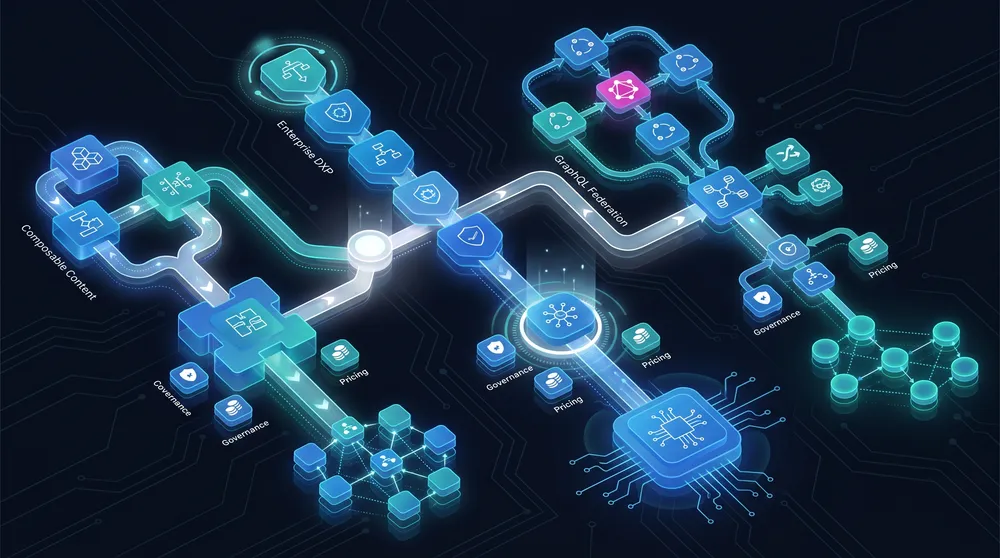
Pick the CMS Around the Content Model
Contentful, Contentstack, and Hygraph can all deliver headless content. The difference is how they model complexity, govern editors, price usage, and integrate with the rest of your stack.
What to Check Before Choosing
Use these checks before committing to a headless CMS contract or migration.
Content Model
Map content types, references, components, localization, assets, taxonomies, and reusable page sections before comparing plans.
API Demand
Estimate API calls, uncached requests, asset traffic, preview traffic, build traffic, and mobile app usage.
Editorial Workflow
Check scheduled publishing, comments, tasks, approvals, custom workflows, localization, live preview, and bulk operations.
Governance
Compare SSO, custom roles, permissions, audit logs, environment governance, data residency, SLAs, support, and compliance reviews.
Integrations
List ecommerce, PIM, DAM, CRM, search, translation, analytics, experimentation, personalization, and front-end hosting dependencies.
Total Cost
Budget platform, overages, implementation, migration, front-end hosting, developer support, content operations, training, and future rework.
Feature Comparison
| Area | Contentful | Contentstack | Hygraph |
|---|---|---|---|
| Pricing transparency | Good at entry level: Free and Lite are public, Premium is custom. | Low: official page is sales-gated with no public dollar pricing. | Strong: Hobby and Growth are public, Enterprise is custom. |
| Best fit | Teams that want a mature composable content platform with a broad ecosystem. | Enterprise teams that need workflows, personalization, automation, and DXP packaging. | Teams that want GraphQL-first APIs, content federation, flexible relationships, and clear self-service pricing. |
| Developer experience | Strong APIs, SDKs, CLI, app framework, marketplace, and mature docs. | API-first enterprise CMS with REST, SDKs, GraphQL support, marketplace, and enterprise integrations. | Native GraphQL, GraphQL mutations, management SDK, remote sources, and content federation strengths. |
| Editorial experience | Strong structured content, scheduled publishing, comments, tasks, live preview, and optional Studio. | Strong enterprise workflow, timeline previewing, visual building/editing, custom workflows, and AI writing assistant. | Strong component-based modelling, live preview, comments, assignment workflow, custom workflows on Enterprise, and localization. |
| Governance | Free and Lite have basic roles. Premium adds advanced governance, compliance, security, SSO, SLAs, and support. | Enterprise-oriented governance with granular permissions, custom workflows, and sales-scoped support. | Growth has basic roles. Enterprise adds SSO, audit logs, custom roles, fine-grained permissions, custom SLAs, and dedicated support. |
| Front end | Bring your own front end and host it separately. | Bring your own front end or consider Contentstack Launch. | Bring your own front end and host it separately. |
The Important Difference
Contentful and Hygraph are easier to budget before a sales conversation because they publish useful entry-level prices. Contentstack is harder to budget because its official pricing is quote-based. That does not make Contentstack weaker, but it does mean procurement and total-cost planning matter earlier.
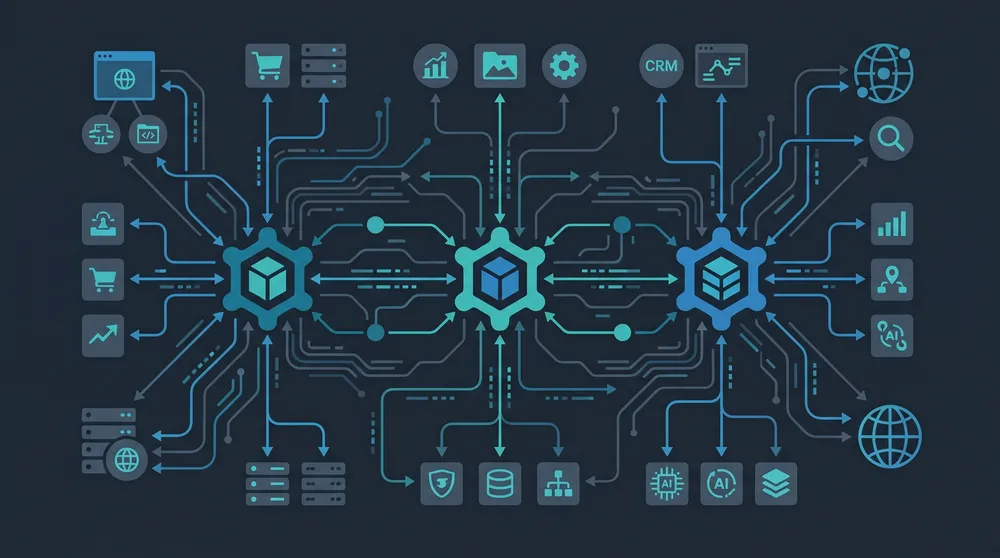
The other big difference is API philosophy. Contentful is flexible and mature across content delivery patterns. Contentstack is enterprise workflow and experience-platform oriented. Hygraph is the most GraphQL-native and content-federation-friendly of the three, which can be a major advantage when content must be assembled from multiple systems.
When to Choose Contentful
- You want a mature, widely adopted headless CMS with strong docs, APIs, SDKs, marketplace apps, and partner ecosystem.
- You need a free starting point and a clear Lite plan before moving to enterprise.
- You want optional expansion into Contentful Personalization, Studio, and AI Actions.
- Your team is comfortable with content spaces and wants a broad composable content platform.
When to Choose Contentstack
- You are an enterprise team with complex publishing governance, localization, personalization, and cross-channel content operations.
- You want a sales-scoped platform with CMS, CDP, personalization, automation, AI, and optional integrated front-end hosting.
- You have procurement, implementation, and partner capacity for a larger DXP project.
- You value enterprise workflow and business-user governance more than self-service pricing transparency.
When to Choose Hygraph
- You want native GraphQL as a first-class content API instead of an added layer.
- You need content federation or want to unify content from ecommerce, PIM, DAM, search, or other systems.
- You want clear Hobby and Growth pricing before talking to sales.
- You need flexible relationships, components, remote sources, and a developer-friendly content architecture.
Common Mistakes
- Choosing a headless CMS before modelling the content properly.
- Comparing subscription price while ignoring front-end hosting and implementation cost.
- Underestimating API calls from previews, static builds, mobile apps, personalization, and uncached requests.
- Assuming enterprise governance is included on low-tier plans.
- Not testing the editor workflow with real content creators.
- Choosing Contentstack without budgeting for a sales-led implementation cycle.
- Choosing Contentful or Hygraph without checking future enterprise limits and overage behaviour.
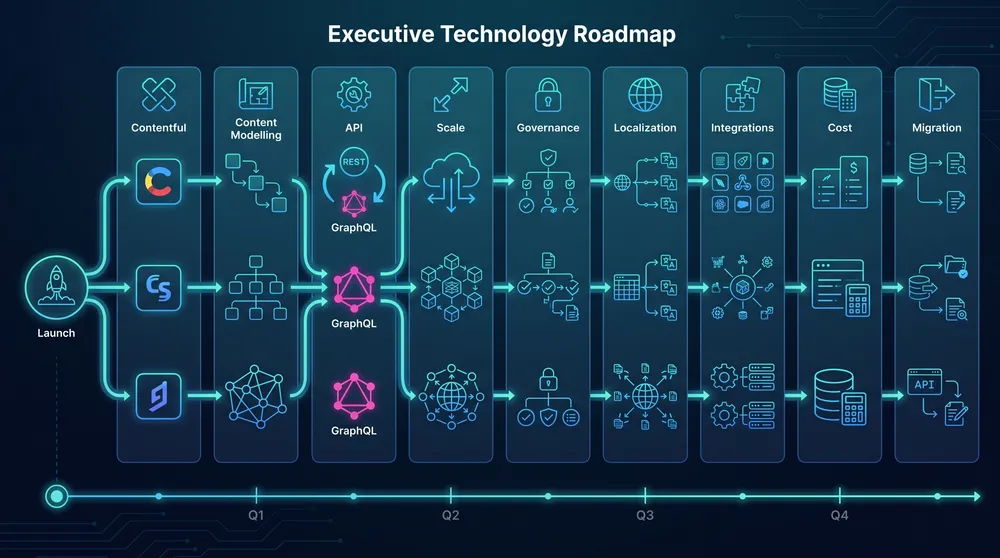
Compare the Next Three Years, Not the Demo
A successful headless CMS should still make sense after the first launch, when the team adds channels, regions, workflows, integrations, and more content.
Recommended Plan by Situation
Prototype or Small Content App
Start with Contentful Free or Hygraph Hobby. Contentful is a familiar choice if your team wants a broad ecosystem. Hygraph is compelling if developers want GraphQL-first modelling from the beginning.
Growing Marketing Site or Portal
Compare Contentful Lite at about AUD 510/month with Hygraph Growth at about AUD 338.30/month. Contentful may suit teams that want a mature ecosystem and collaboration features. Hygraph may suit teams that want GraphQL, content federation, and better pricing transparency.
Enterprise Multi-brand Program
Shortlist Contentful Premium, Contentstack AXP CMS, and Hygraph Enterprise. Run a scored procurement process across governance, localization, permissions, content modelling, APIs, audit logs, SLAs, support, data residency, and partner ecosystem.
Composable DXP With Personalization
Contentstack and Contentful Premium deserve a serious look. Contentstack packages CMS, personalization, real-time data activation, automation, AI, and Launch more explicitly. Contentful offers Personalization, Studio, and AI Actions as an expansion path from the platform.
GraphQL-first Product or Marketplace
Hygraph is often the strongest first evaluation because of native GraphQL, remote sources, content federation, flexible relationships, and enterprise scaling options.
Final Recommendation
Choose Contentful if you want a mature composable content platform with public entry pricing and a strong ecosystem. Choose Contentstack if you are buying an enterprise experience platform and expect a quote-based procurement process. Choose Hygraph if GraphQL, federation, content modelling flexibility, and transparent Growth pricing are central to the project.
The safest way to decide is to build a small proof-of-concept with real content, real editors, real API traffic, and a realistic front-end hosting plan. The CMS that feels best in a polished demo is not always the CMS that runs cheapest or cleanest after three years of content growth.